Fred Godfrey Songs on Film
A number of Fred Godfrey’s songs have turned up on the silver screen over the years, sometimes
in unexpected places. Bless
’Em All has been used numerous times in films set in World War Two, while other Godfrey songs have helped to evoke the Music Hall era. In only a couple of instances, for Max Miller and George Formby, was Godfrey commissioned to write songs for a particular film. Godfrey songs have the distinction of being heard in three films that either won or were nominated for the Academy Award for Best Picture: Cavalcade (1933, winner); Twelve O’Clock
High (1949); and Atonement (2007).
 |
 |
Author’s collection. |
Author’s collection. |
Bless ’Em All (1940)
Fred Godfrey’s most popular success has been used on many soundtracks, usually to evoke the sing-along chumminess of wartime Britain. The first film to use the song, though just a very brief snatch, seems to have been the Royal Air Force quasi-documentary Target For Tonight, released in July 1941. Then, in A Yank In The RAF, starring Tyrone Power and Betty Grable, also released in 1941, it is heard as background music in the swank London nightclub where Power (the Yank in the RAF) goes looking for his former stateside girlfriend Grable. In Confirm Or Deny (1941), starring Don Amerche, Joan Bennett, and Roddy McDowall, the song is sung in a London tube station.
In Captains Of The Clouds (1942), a Technicolour film about hardy Canadian bush pilots going off to war and partly shot on location in Canada, James Cagney and Alan Hale sing and dance a spirited version of Bless ’Em All. Also in 1942, a very young Robert Stack and the rest of his squadron of “Polish” flyers sing Bless ’Em All around a piano on their English airfield in Ernst Lubitch’s To Be Or Not To Be, starring Jack Benny and Carole Lombard. That same year, the song makes an appearance in the Frank Randle comedy, Somewhere In Camp. In 1944, Bless ’Em All appears in the film version of the Oscar Wilde short story The Canterville Ghost, starring Charles Laughton as the Ghost, and Robert Young, Margaret O'Brien, and Reginald Owen, and in the comedy English Without Tears, starring Michael Wilding and Margaret Rutherford.
Bless ’Em All was also used in two wartime films about the US Marines, who adopted the song as their unofficial anthem. In Guadalcanal Diary (1943), starring Lloyd Nolan, William Bendix, and Anthony Quinn, Bendix and other Marines sing it while digging a gun pit on that infamous island — unusually, they sing the British lyrics. And in Marine Raiders (1944), the song is used as a recurring theme in the scenes set in Australia — at one point, stars Pat O’Brien and Robert Ryan sing it in a Melbourne club. A wartime documentary entitled Tunisian Victory (1944), co-directed by Frank Capra and narrated by Burgess Meredith (among others), also interpolates Bless ’Em All in the soundtrack.


Numerous postwar films about the late conflict used Bless ’Em All to establish atmosphere or to quote the era. In The Captive Heart (1946), a British film set in a prisoner-of-war camp in Germany and starring Michael Redgrave, POWs sing Bless ’Em All in their compound. It is heard briefly in the U.S. Army Air Force drama Twelve O’Clock High (1949), starring Gregory Peck and Dean Jagger, and in Chain Lightning (1950), Humphrey Bogart and Eleanor Parker are among the singers gathered around a piano in a wartime London nightclub. Also in 1950, in The Blue Lamp, the famous British police film starring Dirk Bogarde, a drunk serenades a police station with a snatch of the song. In 1951, director John Ford chose to include Bless ’Em All in his documentary about the Korean War, This Is Korea!
 |
 |
Author’s collection. |
Author’s collection. |
Betrayed (1954), a story set in the German-occupied Netherlands and starring Clark Gable, Lana Turner, and Victor Mature, uses Bless ’Em All to good effect, particularly over the closing credits. Battle Cry (1955), based on the novel by Leon Uris and starring Van Heflin, James Whitmore, Raymond Massey, and Tab Hunter, also uses Bless ’Em All. The song is heard in a 1955 British comedy, Simon And Laura, starring Peter Finch, Kay Kendall, and Ian Carmichael. In The Man Who Never Was (1956), starring Clifton Webb, Gloria Grahame, and Stephen Boyd, it is heard being sung by patrons in a pub, and in The Young Lions (1958), starring Marlon Brando, Montgomery Clift, and Dean Martin, a group of servicemen sing it in a London club in a scene with Martin. The Long And The Short And The Tall — a gritty 1961 film starring Richard Todd, Laurence Harvey, Richard Harris, and David McCallum about British soldiers fighting the Japanese in the Malayan jungle — borrows Bless ’Em All’s lyrics for its title and, appropriately, uses the song over its opening and closing credits.
 |
.jpg) |
.jpg) |
 |
Image source: learnaboutmovieposters.com, with permission |
Author’s collection. |
Poster for the Swedish release of The Colditz Story |
The song is also heard in Bless ’Em All, a 1949 comedy starring Hal Monty and Max Bygraves; The Proud And The Profane (1956), starring William Holden and Deborah Kerr; The Colditz Story (1957), starring John Mills and Eric Portman; Desert Mice, a 1959 comedy starring Sidney James; Operation Bullshine (1959), starring Donald Sinden; The Victors (1963), with an all-star international cast that included George Peppard, Melina Mercouri, and Jeanne Moreau; The Thin Red Line (1964), another film about US Marines on Guadalcanal, starring Keir Dullea and Jack Warden; and Till Death Us Do Part (1969), in which it is sung by the film’s star, Warren Mitchell.
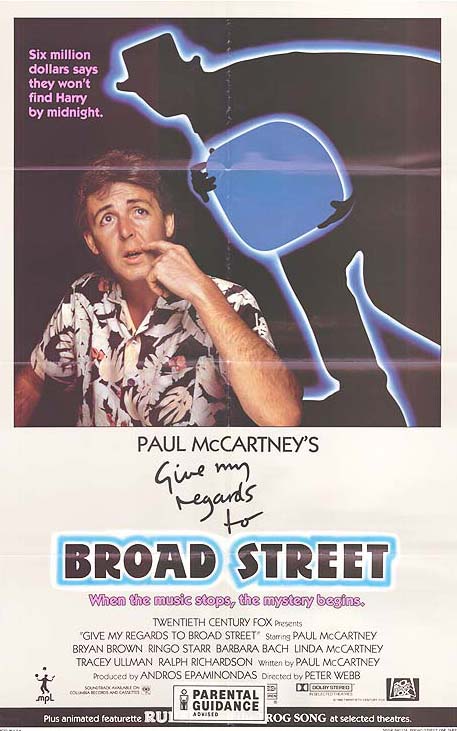
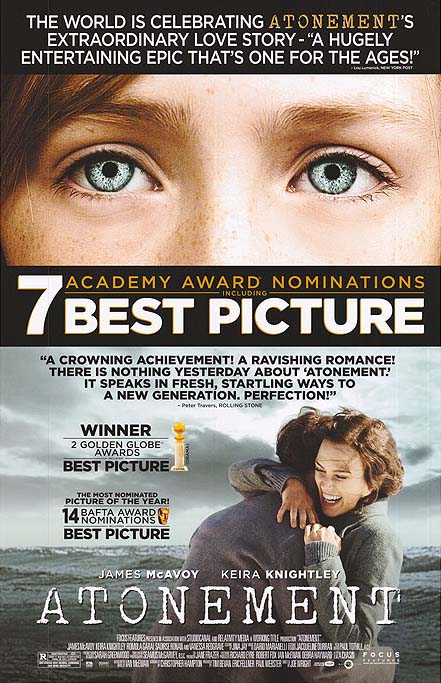
Bless ’Em All still surfaces in odd places: Paul McCartney, no less, sings a snatch of the song in his 1984 film Give My Regards To Broad Street, and Tommies sing it around a piano (what an original idea!) in the Academy-Award-nominated 2007 film Atonement, starring James McAvoy, Keira Knightley, and Vanessa Redgrave, whose father Michael appeared in a film that used the song more than half a century earlier.
 |
 |
 |
|
Image source: movieposter.com, with permission |
Image source: movieposter.com, with permission |
Image source: movieposter.com, with permission |
Image source: movieposter.com, with permission |
Everything Happens To Me (1938)
This 1938 Max Miller vehicle, featuring Max’s hijinks at the seaside, uses two Fred Godfrey numbers: the title song, which Max sings while settling down to sleep in his car on the beach, and the big production number, At The Bathing Parade, which Max sings as he introduces a parade of young lovelies in old and new bathing styles, followed by an extended dance routine.
 |
Author’s collection. |
Home Guard Blues (1943)
This song was written for George Formby, Jr.’s 1943 film Get Cracking. The lad with the ukulele performs it sitting atop a home-made “tank” that is meant to help repel the invader.
 |
Image source: thecinematrade.com, with permission |
The Kangaroo Hop (1912)
A hit for Billy Williams, “The Man in the Velvet Suit,” this take-off on the wacky animal dances of the era (the Turkey Trot, the Grizzly Bear, the Fox Trot — about the only one that survived) was revived in the zany Gene Wilder film, The Adventures Of Sherlock Holmes’ Smarter Brother (1975), where it is sung and danced to by Wilder, Madeleine Kahn, and Marty Feldman. It is also heard in the 2014 Australian film Tracks.
.jpg) |
Image source: https://en.wikipedia.org/wiki/Wonder_Woman_(2017_film) |
Molly O’Morgan (The Irish-Italian Girl)
This big Godfrey hit is heard in the 1946 British film Gaiety George, starring Richard Greene and Ann Todd, and, somewhat remarkably, in the 2017 blockbuster Wonder Woman, starring Gal Gadot and Chris Pine.
Take Me Back To Dear Old Blighty (1916)
One of the most famous British songs of World War One, Blighty is heard being sung by returning Tommies in the opening sequence of This Happy Breed (1944), David Lean’s film of Noël Coward’s great saga of an interwar British family, starring Robert Newton, Celia Johnson, John Mills, and Stanley Holloway. It appears in a 1929 Vitaphone short called Pack Up Your Troubles, where it is sung by a group called The Lyric Quartet, and in Not So Quiet On The Western Front (1930), starring Leslie Fuller and Mona Goya. It is reprised in 1943’s Variety Jubilee, a film about the Music Halls and featuring appearances by Charles Coborn, Tom E. Finglass (as Eugene Stratton), Ella Retford, and George Robey. Blighty shows up in Love Story (1944), starring Margaret Lockwood and Stewart Granger; The Rake’s Progress (1945), starring Rex Harrison and Lilli Palmer, and in the Errol Fynn film Let’s Make Up [also known as Lilacs In The Spring] (1956). In The L-Shaped Room (1962), Australian actress Cicely Courtneidge, playing an aging Music Hall star, belts it out in army tunic and cap. In the 2006 film Flyboys, World War One British airmen are heard singing it in their barracks in France.
 |
 |
 |
Image source: movieposter.com, with permission |
Image source: movieposter.com, with permission |
Image courtesy of the Hershenson/Allen Archive, http://emovieposter.com/ |

Take Me Back To Yorkshire (1910)
Noël Coward uses this song, performed by seaside singers, to quote the Edwardian era in Cavalcade, his Academy Award-winning 1933 film starring Diana Wynyard and Clive Brook.
Image source: The Swedish Film Institute. |

Who Were You With Last Night? (1912)
The first film to use this huge Fred Godfrey hit was, oddly, a Swedish production called Trötte Teodor (1931), where it is given the title Var har du vatt I natt? It is also heard in the 1933 British film comedy That’s My Wife, starring the now-forgotten Claud Allister, Frank Pettingell, and the delightful Betty Astell; in Beloved Enemy (1936), starring Merle Oberon, Brian Aherne, Donald Crisp, and a young David Niven; and on the soundtrack of the 1948 film of Terence Rattigan’s play The Winslow Boy, starring Robert Donat. The song was revived once more for the 2015 film The Dressmaker, starring Kate Winslet.
 |
|
Image source: The Swedish Film Institute. |
Image source: The Swedish Film Institute. |

Why Can’t We Have The Sea In London? (1911)
This song, recorded by Australian Music Hall star Billy Williams, has been used, improbably, in two Swedish films, Åh, i morron kväll (1919, a silent film. but the song presumably was indicated for the accompanying music); and Boman får snurren, starring Åke Söderblom (1949).